Past events & courses
-
Pre conference course E - Basics in Biosecurity
Biosecurity impacts all biosafety professionals to varying degrees. As biosafety professionals we also have to give guidance and advise on biosecurity issues. How can one determine the potential for misuse within a laboratory setting? What biosecurity measures help preventing misuse? What elements need to be considered in a biosecurity concept? It is a basic course for biosafety officers, biosafety professionals and other interested persons who also have biosecurity responsibilities. This course will provide participants with an overview about the main elements of a biosecurity program and concrete examples from practice covering the veterinary as well as the human side.Read more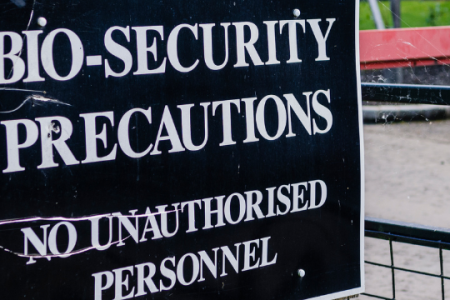
-
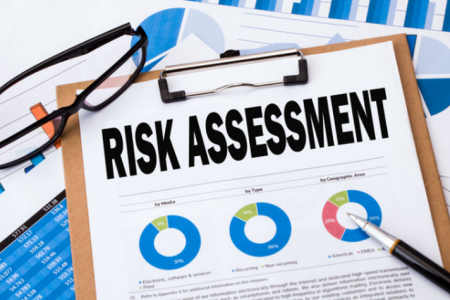
The basics of risk assessment
This online course is designed to provide attendees with a basic knowledge and requirements to complete risk assessments of laboratory activities.Read more
-
BBP workshop - Biocide Product Regulation and biosafety: new insights & future perspectives
One of the requirements of the 'contained use' legislation is the use of validated methods for inactivation of these GMOs and pathogens, the decontamination of work tables, etc. This is where the biocidal products regulation (BPR) comes in. However, for certain applications (e.g. inactivation of parasites, disinfection of water baths to heat up laboratory reagents), there are currently no authorised biocidal products available on the market.Read more
-
EBSA Thursday - How ISO standards and technical specifications can support you in your daily life as BSO (and how you can support ISO with your technical knowledge as BSO)
ISO35001:2019 Biorisk management for laboratories and related organizations is the well-known ISO management system standard supporting you in organizing biosafety and biosecurity in your organization and helping you to address all biorisk management issues that need to be addressed in a concerted manner. It builds on the continuous improvement plan- do-check-act-cycle to keep your biosrisk management system up to date and under control. ISO35001 was designed by biosafety experts like you form different countries around the globe, being a truly international standard, within the context of the International Standardization Organization, ISO, Technical Committee TC212, Clinical laboratory testing and in vitro diagnostic test systemsRead more
-
Demystifying ABS, Nagoya Protocol and the EU ABS Regulation – what you need to know when importing and using genetic resources.
A 2,5 hour online course (including a break and question session) Instructor: Dominic Muyldermans Description: The principles of Access and Benefit Sharing (ABS) were first recognised under the Convention on Biological Diversity, refined in the Nagoya Protocol and are further implemented in national ABS laws. In EU an additional compliance regulation applies.Read more
-
EBSA Thursday - Joint EBSA – IVBWG Construction design workshop
EBSA members can join a part of the 20th Workshop of the International Veterinary Biosafety Working group online.Read more
-
Commissioning and decommissioning of contained use facilities
During this workshop you will first get an introduction on the topic ‘commissioning and decommissioning’. In the afternoon there will be plenty of opportunity to share your experiences during our round table discussion. Focus will be on BSL2 facilities. To end the day, you will get an insight into the ITM’s history and get a tour at this unique location.Read more -
Pre conference course F. Introduction to Human Factors in a Laboratory or scientific facility
Instructors: Adam Stevenson and Wendy ShellAim: To be aware of human factors and how to take account of such in a laboratory or in vivo containment facility.Read more
-
Pre conference course C. Recombinant virus and viral vectors for research, gene therapy and vaccination: “GMO or not? Safe or not? Manageable or not?
There are a variety of investigational human and veterinary medicinal products consisting of or containing GMOs. GMOs for human medicines may include the following: human cells modified ex vivo; vaccines; recombinant virus-based vectors, including those containing genome editing nucleic acid sequences (which may also be delivered non-virally) and bacterial vectors.Medicinal products based onmRNA are on the rise. One need to define which constructs are still GMOs or not, which constructs are less or more hazardous than the wildtype virus, they are derived from, and which might serve as agent to harm others. How are people and the environment protected when they are widely used, also outside controlled laboratory settings. There is guidance and regulation. Which ones to apply is the one hundred Euroquestions.Read more