Past events & courses
-
Personal Protective Equipment
Instructors: Ulrika Allard Bengtsson and Per StaugaardThis course will both give a theoretical overview of the use of personal protective equipment (PPE) in BSL2 and BSL3 laboratories ...Read more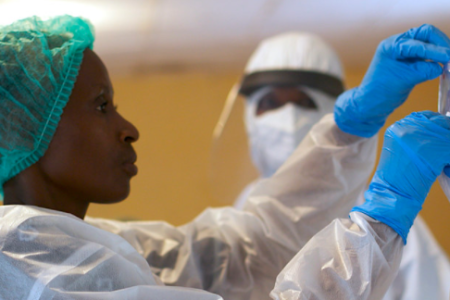
-
Introduction to vaccinology
Instructor: Gideon Kersten The course gives insight in the exciting field of vaccinology. The relevance of vaccines does not need emphasis in these days. But how do they work? ...Read more
-
Disinfection and Sterilization
This course is an introduction to the subject. It describes the most commonly used chemical and physical methods, with an emphasis on the important criteria to be assessed in choosing an approach and verifying its effectiveness.Read more
-
Bloodborne pathogens in the lab: minimize exposure & prevent infection
Instructor: Dana Brehar-CioflecModerator: Ruth Knorr This course will provide an overview on the main aspects of working safely with blood and blood containing materials in various types of laboratories (diagnostic, research, etc.). Prevention of laboratory infections involving bloodborne pathogens will be addressed with focus on general and specific prevention measures, materials and equipment, as well as health monitoring. Brief exercises will be included to highlight the discussed aspects. International and European regulations and recommendations will be highlighted and relevant references and links will be provided.Read more
-
Biosafety Culture
Instructors: Jan Piet Tijssen & Cathy BakkerThis course intends to inspire you. To convince you that safety not only pays (for you and the company), but also is fun and moreover a serious profession.Read more
-
Biological Risk Assessment – How safe are we in our labs if we apply the risk based approach according to the new WHO Biosafety Manual?
In this webinar these and other questions will be addressed by using the risk based approach of the new WHO biosafety manual.Read more
-
Managing infectious aerosols in a laboratory setting: Lessons learned from COVID-19
The types of equipment to generate and measure aerosols will be described as will a review of information used to inform risk assessments for the generation and spread of aerosols.Read more
-
Pre conference course F. Introduction to Human Factors in a Laboratory or scientific facility
Instructors: Adam Stevenson and Wendy ShellAim: To be aware of human factors and how to take account of such in a laboratory or in vivo containment facility.Read more
-
Pre conference course C. Recombinant virus and viral vectors for research, gene therapy and vaccination: “GMO or not? Safe or not? Manageable or not?
There are a variety of investigational human and veterinary medicinal products consisting of or containing GMOs. GMOs for human medicines may include the following: human cells modified ex vivo; vaccines; recombinant virus-based vectors, including those containing genome editing nucleic acid sequences (which may also be delivered non-virally) and bacterial vectors.Medicinal products based onmRNA are on the rise. One need to define which constructs are still GMOs or not, which constructs are less or more hazardous than the wildtype virus, they are derived from, and which might serve as agent to harm others. How are people and the environment protected when they are widely used, also outside controlled laboratory settings. There is guidance and regulation. Which ones to apply is the one hundred Euroquestions.Read more